Fashion - Sustainability problems
We have talked a lot about fast fashion and problem of throwaways it brings along with it. But it is not entirely the problem of excess clothing and landfills which is the crux of issues caused by fashion. It is much more harmful to the environment than we can see at the surface. We want to talk about sustainable fashion, so before that we need to talk about what makes fashion not sustainable in its current form in the most of the companies across the globe.

Lets talk about what goes behind creating a garment
- Natural raw materials like cotton are grown as a crop using multiple resources
- Synthetic raw materials like polyester and nylon are created in factories
- Materials like wool, fiber are sourced from different animals
- Transport of raw and processed materials happens across locations
- Fabrics are processed, washed, edited, printed, dyed in different setups - factories and manual
- Packaging of final garments happen and are again transported to different parts of the world for sale
Air pollution
Big corporate houses cannot afford their production processes to be dependent on people. So they use machines which always come at a cost of environment especially causing air pollution with carbon emissions. Fashion production makes up 10% of humanity’s carbon emissions - 1.7-billion tons of CO2 per year. And if the fashion sector continues on its current trajectory, that share of the carbon budget could jump to 26% by 2050, according to a 2017 report from the Ellen MacArthur Foundation

Lot of synthetic fiber creation also involves using raw materials like oil products, extraction of which also involves heavy machinery resulting in huge carbon emissions. Overall a synthetic fiber T Shirt emits 3 times more carbon than a cotton T Shirt

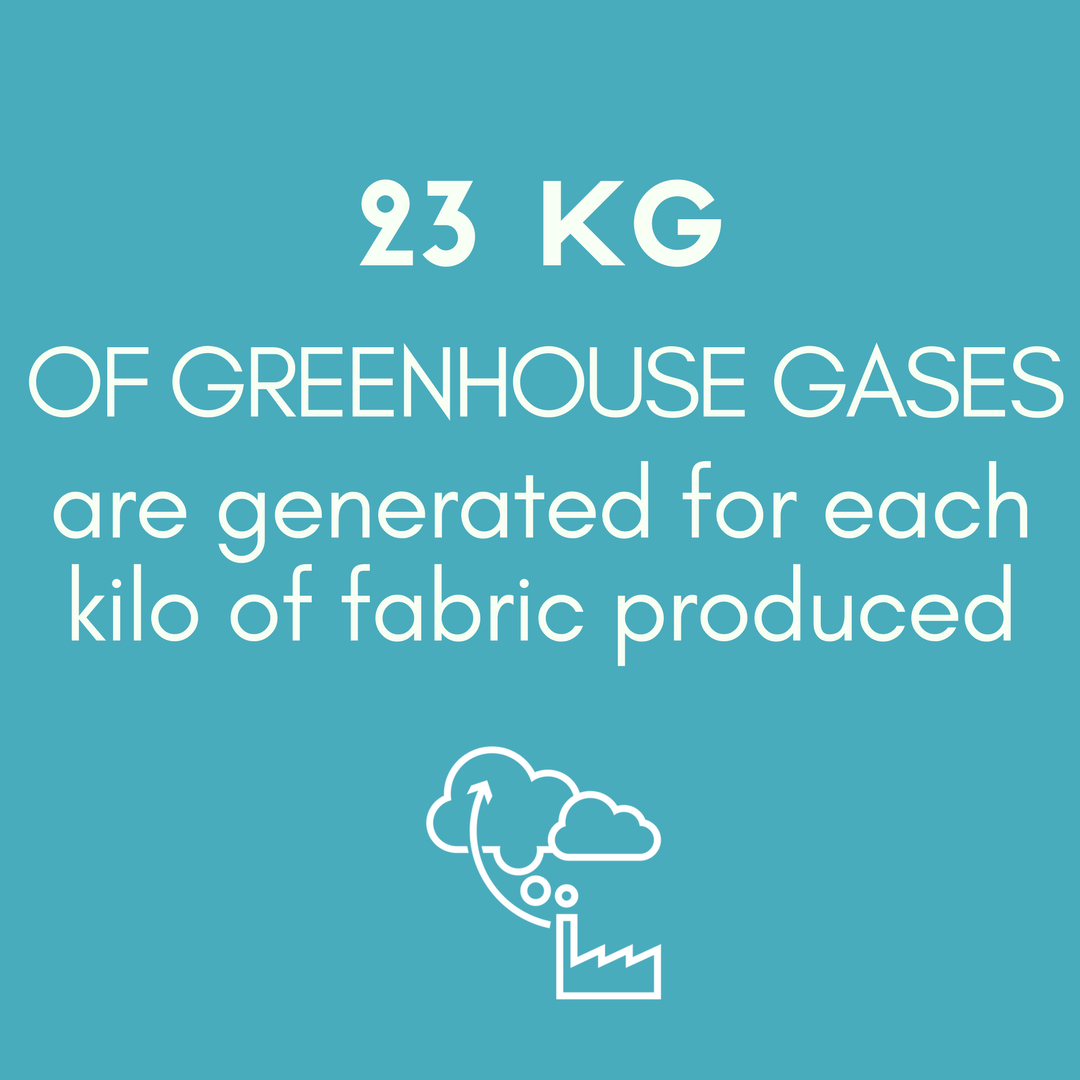
Other than the factories, there is a lot of transport of raw materials, processed fabrics, final garments which also results in carbon emissions, fuel usage, air pollution.

Natural resources
Since overall garment production involves a number of steps involving natural materials, it also uses a lot of natural resources like oil, water, coal. Since 60% of all garments created today are synthetic fiber based, it uses lot of natural energy sources like oil and coal.
98 million tons of oil were used in the textile industry in 2015 alone. Those numbers keep rising exponentially, year-on-year, according to the Ellen Macarthur Foundation. By 2050, if nothing is accomplished on the sustainability front, the textile industry will be using 300 million tons of oil. Thats a lot of perishable natural resource that is needed by the world for a lot of other day to day essentials.

Fashion industry is the second biggest consumer of water in the world and that's a resource that has been up in discussions a lot lately involving the keyword #conservation. If using synthetic materials in its current form is not sustainable, then neither is natural fibers like cotton. Cotton is a highly water intensive plant. One cotton shirt takes about 2500 litres of water to produce. Similarly a jeans takes about 7500 litres of water. To put numbers into perspective, an average person drinks about 700 litres of water directly in a year. This is to say that your entire wardrobe could mean drinking water for a whole family for a lifetime. Think about that next time you buy a garment that you don't need.
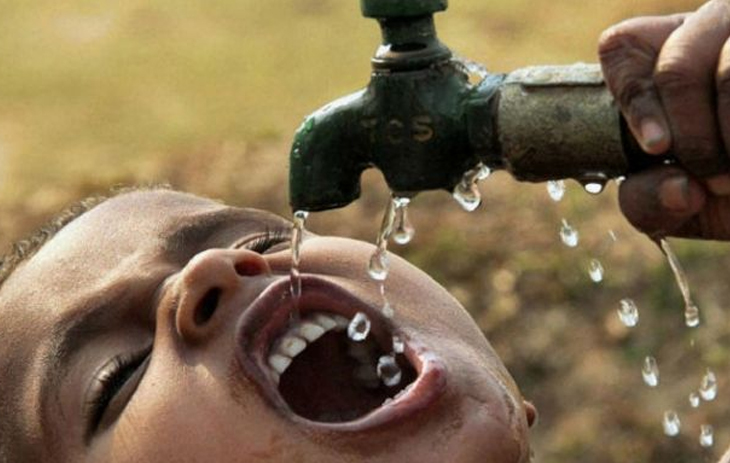
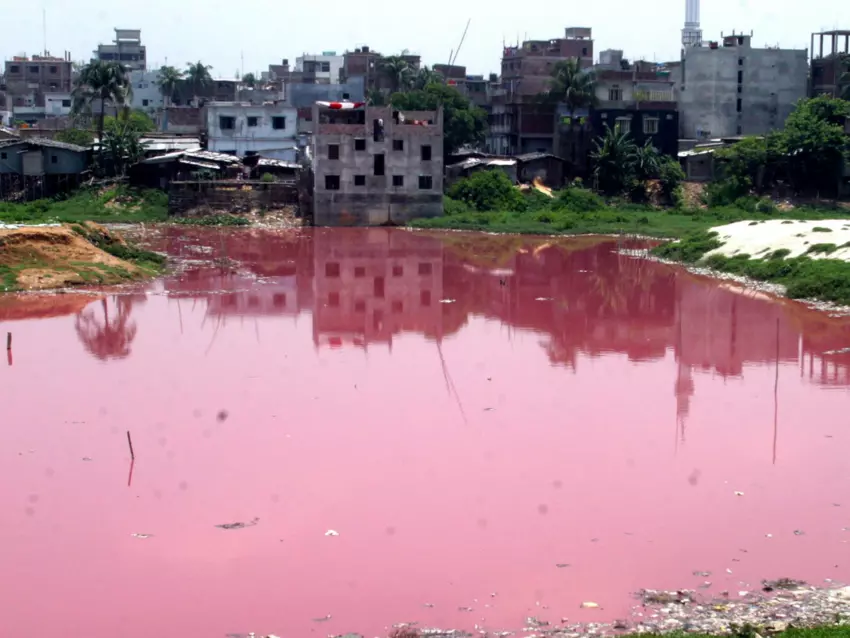
In a lot of countries, natural water bodies have already started to dry up and it won't be long when there is a shortage of drinking water in these parts of the world. We are starting a global water crisis very soon and, very evidently, fashion industry is one of the largest contributors to this crisis.

Landfills/Garbage
As is evident, fashion always had environmental issues on the face of it but what has multiplied the problem manifolds in recent years is fast fashion. Most of the brands used to have 2 collections in a year about 20 years ago and now a lot of brands like Zara and H&M have around 20-30 collections in a year. Cost of each garment has also drastically dropped over the years causing consumers to care less when buying something.Consumers are at as much fault. The lifetime of a garment has reduced by 50% and there are 60-70% more garments bought by an individual compared to 20 years ago. A lot of this clothing ends up in the dump. The equivalent of one garbage truck full of clothes is burned or dumped in a landfill every second

Also, the packaging materials used in the textile industry are also not sustainable. With the volumes ever-rising, packaging has started becoming one of the major problems at hand, all leading to landfills and unbelievable amount of garbage, which is a apocalypse waiting to happen.
Other issues
Soil degradation: Lands used for growing certain raw materials cause the soil to not be usable for other crops
Animal Agriculture: Animals are also harmed in some parts of the world during some of the raw material gathering. Animal agriculture is one of the main reasons for deforestation and wastewater from animal agriculture has a massive impact on its local environment, affecting both biodiversity and the people living nearby.
References
- Anon., n.d. https://sanvt.com/journal/environmental-impact-of-fast-fashion-infographic/ [Online]
- Anon., n.d., https://www.weforum.org/agenda/2020/01/fashion-industry-carbon-unsustainable-environment-pollution/ [Online]
- Anon., n.d., https://www.notjustalabel.com/editorial/saving-china-sustainable-fashion [Online]
- Anon., n.d., https://oilprice.com/Energy/Energy-General/How-Much-Oil-Does-The-15-Trillion-Fashion-Industry-Use.html [Online]
- Anon., n.d., https://akvosphere.com/wp-content/uploads/2018/01/water-crisis-india.jpg [Online]
- Anon., n.d., https://wikipedia.org [Online]
- Anon., n.d., https://www.woodstrk.com/blogs/blog/8-reasons-why-sustainable-fashion-matters [Online]


Comments
Post a Comment